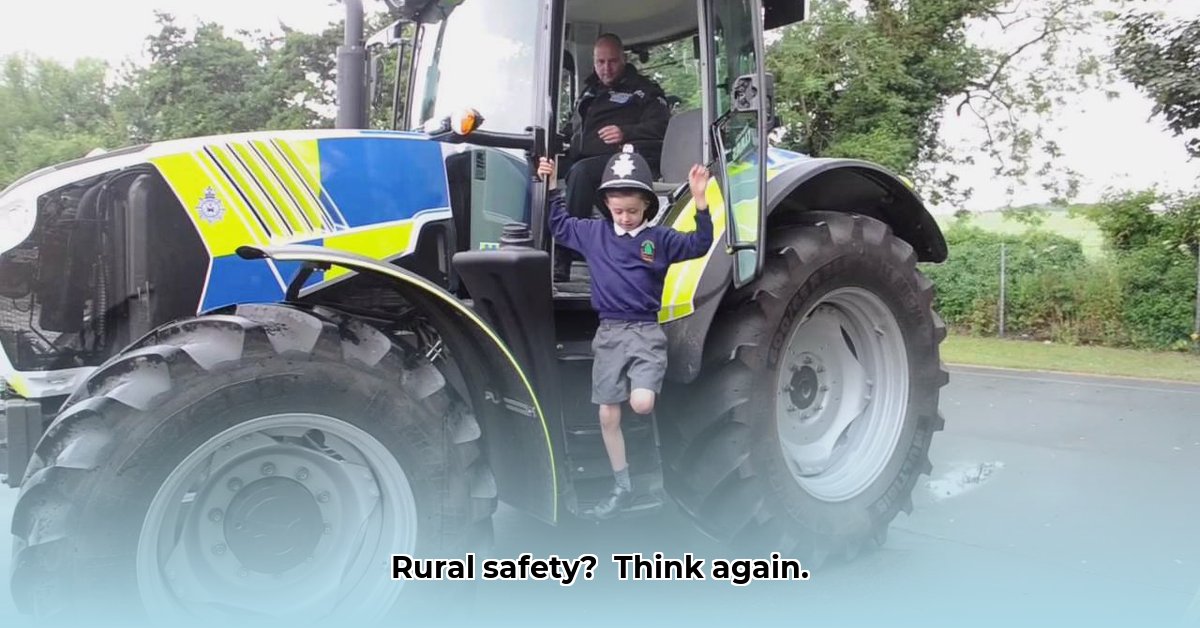
A Novel Approach to Rural Policing: Tractors and Community Engagement
The sight of a police officer piloting a tractor through a picturesque village may seem unusual, yet this is the reality in certain UK counties like Derbyshire and Devon & Cornwall. This innovative approach to rural policing aims to enhance community engagement and address unique crime challenges in sparsely populated areas. However, the initiative is not without its critics, raising questions about its cost-effectiveness and overall impact on crime reduction. This analysis explores both sides of the argument.
The Tractor as a Community Engagement Tool
The use of tractors has proven surprisingly effective in fostering positive interactions between police officers and rural communities. Their presence at local events, such as summer shows and agricultural fairs, has been met with overwhelmingly positive responses. One report highlighted the Derbyshire tractor as a "huge hit" at summer shows, facilitating conversations and building rapport between law enforcement and residents. This increased visibility challenges the traditional, sometimes distant, image associated with police cars. The tractor acts as an approachable, less formal interaction point, making officers more accessible and fostering trust.
Cost Concerns and the Question of Effectiveness
Despite the apparent benefits of enhanced community engagement, concerns remain regarding the financial implications of the police tractor initiative. The acquisition, maintenance, and operation of specialized police tractors represent a substantial financial investment. Critics question whether this expense is justified, especially in the absence of conclusive evidence demonstrating a direct correlation between tractor deployment and a reduction in rural crime rates. The skepticism is further fueled by perceptions of the initiative as potentially more of a public relations exercise than a significant crime-fighting strategy. At present, hard data linking tractor patrols to measurable crime reduction is lacking.
Analyzing the Contrasting Perspectives: Pros and Cons
The success of the police tractor initiative hinges on a balanced consideration of its advantages and disadvantages. While enhanced community engagement and increased accessibility are clear positives, the significant financial burden and the lack of demonstrable crime reduction are substantial drawbacks. This necessitates a thorough cost-benefit analysis, considering both the tangible (financial) and intangible (community relations) elements of the program. Such analyses must go beyond simple cost-benefit calculations, taking into account the complexities of rural policing and quantifying variables like improved response times and enhanced community trust.
The Unique Landscape of Rural Policing
Rural policing presents several unique challenges, including vast distances, dispersed populations, and limited resources. Traditional policing methods often prove less effective in these contexts. The police tractor offers a potential solution by improving officer accessibility and fostering more personal interactions with residents. This enhanced visibility and engagement can be crucial for building relationships, sharing information, and ultimately, deterring crime. However, the question remains: is the tractor a comprehensive solution, or merely one piece of a much larger puzzle that requires increased funding and manpower?
The Need for Robust Evaluation and Long-Term Planning
To determine the true effectiveness of the police tractor initiative, a rigorous evaluation is essential. This must involve a multi-faceted approach, encompassing both quantitative data on crime rates and qualitative feedback from communities and officers involved. Longitudinal studies are crucial here to assess the long-term impacts of the program and avoid drawing conclusions based on short-term observations. Furthermore, planning for the program's future involves securing sustainable funding and exploring cost-reduction strategies, such as potential partnerships with agricultural organizations.
Conclusion: A Promising Concept Requiring Further Scrutiny
The police tractor initiative represents a novel approach to rural policing, prioritizing community engagement and increased accessibility. While the potential benefits are significant, the lack of conclusive evidence regarding crime reduction and the considerable financial investment require further investigation. A comprehensive evaluation, considering both quantitative and qualitative data, is essential to determine the program’s long-term viability and overall effectiveness. Only through robust research and analysis can we definitively assess the true value of this innovative approach to rural crime prevention.